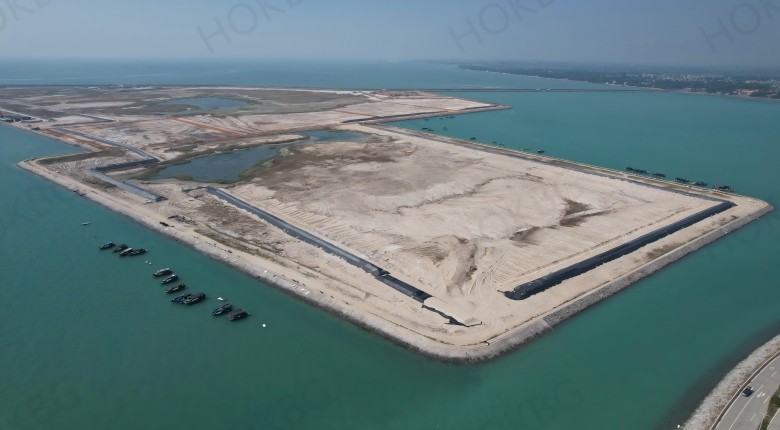
Understanding Land Reclamation: How We Expand Our Shores
- Share
- Issue Time
- Dec 12,2025
Summary
Land reclamation, the process of creating new land from water bodies or restoring degraded land, is increasingly vital globally due to growing populations and urban expansion. This ancient practice, seen in ancient Egypt's agricultural expansion and modern Singapore's urban growth, balances human development with environmental stewardship. The process involves methods like infilling (placing rock and soil to raise land), dredging (removing and relocating sediment), and poldering
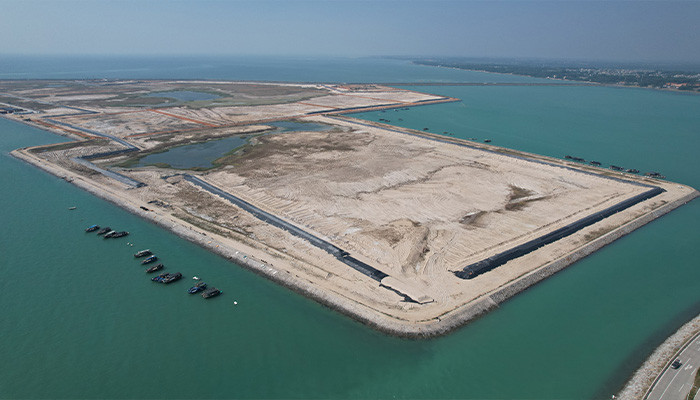
As our global population continues to grow and urban areas expand, the demand for usable land intensifies. This is where land reclamation, a process of creating new land from oceans, seas, riverbeds, or other water bodies, becomes increasingly vital. Join me as we explore how we expand our shores to meet these evolving needs.
Land reclamation is a fascinating and ancient practice that has shaped civilizations for centuries. From ancient Egyptians expanding agricultural output to modern cities like Singapore growing their landmass, understanding land reclamation helps us appreciate the delicate balance between human development and environmental stewardship.
Key Takeaways
- Definition: Land reclamation is the process of creating new, usable land from water bodies like oceans, seas, and riverbeds, or by restoring degraded land to a functional state. It is distinct from land restoration, which aims to return an area to its original, natural state.
- Historical and Modern Importance: Historically, reclamation provided crucial agricultural land, as seen in ancient Egypt and the Netherlands. Today, it is essential for urban expansion in densely populated areas, infrastructure development like ports and airports, and adapting to climate change by providing buffers against rising sea levels.
- Core Methods: The primary methods include infilling (placing rock and soil to raise the land level), dredging (removing sediment from a water body and relocating it), and poldering (draining an area and protecting it with dikes). More specialized techniques like deep cement mixing are used for contaminated materials.
- Benefits: The key benefits are creating space for economic development, increasing food production, managing waste, and expanding infrastructure. Additionally, reclamation projects can be designed for environmental restoration, such as creating new habitats or revitalizing degraded ecosystems.
- Environmental Considerations: While beneficial, reclamation can have significant environmental impacts. These include the destruction of marine habitats at the fill site and the "borrow" site where material is sourced, increased water turbidity affecting marine life, and potential pollution from construction machinery. Modern projects increasingly focus on mitigating these impacts through careful planning, sustainable practices, and creating ecological benefits.
Understanding Land Reclamation: What It Is and Why It Matters
Land reclamation is a powerful intersection of engineering, environmental science, and urban planning. It represents humanity's ability to reshape coastlines and waterways, converting otherwise unusable areas into valuable land for development, agriculture, and conservation. As populations concentrate in coastal cities and the need for space becomes more acute, understanding this process is more important than ever.
My Definition of Land reclamation
At its core, land reclamation is the process of creating new land where there was once water—be it oceans, riverbeds, or lake beds. This newly created area is known as reclamation ground or reclaimed land. It is fundamentally different from land restoration, which aims to return a disturbed area to its previous natural state. Reclamation, in contrast, focuses on creating new, productive land that serves a specific purpose, even if it results in an ecosystem different from the original.
The process can take several forms, from raising the elevation of a seabed with fill material to draining water from wetlands or marshy areas. It can also refer to the process of making degraded or barren land—such as former mining sites or industrial zones—functional and productive again. Ultimately, the goal is to transform unusable spaces into land fit for agriculture, housing, industry, or recreation.
Historical Significance of Land Reclamation
Land reclamation is not a modern invention; it is a practice with deep historical roots that has been pivotal to the survival and growth of civilizations. One of the earliest large-scale projects dates back to ancient Egypt's Twelfth Dynasty (c. 2000–1800 BC). Rulers implemented a sophisticated scheme to divert water from Lake Moeris, using levees and canals to create vast new areas of fertile farmland from the reclaimed land.
Perhaps the most famous historical example comes from the Netherlands. Beginning centuries ago, the Dutch began a relentless campaign against the sea, building dikes and draining marshlands to create "polders." This effort culminated in monumental projects like the Beemster Polder in 1612, which added 70 square kilometers of agricultural land, and later, the Zuiderzee Works. These endeavors have been fundamental to the country's identity and economy.
In Asia, cities like Hong Kong and Singapore have histories intertwined with reclamation. Hong Kong's Praya Reclamation Scheme in the late 19th and early 20th centuries added significant land to its central urban area. More recently, both the city's old and new international airports were built almost entirely on reclaimed land, demonstrating the practice's importance for modern infrastructure.
The Modern Imperative for Land Reclamation
The pressures of the 21st century have made land reclamation more critical than ever. With the global population projected to continue its upward trend, the demand for space for housing, commerce, and public amenities is immense, especially in densely populated coastal regions.
Key drivers for modern land reclamation include:
- Urban Expansion: Cities with limited land, such as Singapore, Monaco, and Hong Kong, rely heavily on reclamation to grow. Singapore, for instance, has increased its land area by 25% since 1960 through systematic reclamation projects, allowing it to build new housing, commercial districts, and public spaces.
- Infrastructure Development: Mega-projects that fuel the global economy, like major ports and international airports, often require vast, flat areas of land that are only available through reclamation. London Gateway Port and Kansai International Airport in Osaka are prime examples of essential infrastructure built on newly created land.
- Climate Change Adaptation: As sea levels rise, land reclamation is becoming a crucial tool for coastal defense. New projects, like Singapore's planned "Long Island," are being designed at a higher elevation to protect against future sea levels and storm surges, often incorporating features like new reservoirs to enhance water security.
- Economic Growth: Reclaimed land provides a direct stimulus for economic development. It opens up opportunities for industrial zones, tourism projects, and real estate, thereby creating jobs and boosting local economies.
In essence, while the historical motivation was often agricultural, the modern imperative is driven by a complex mix of urbanization, economic necessity, and environmental adaptation.
Exploring the Diverse Methods of Land Reclamation
The process of creating new land is a complex engineering challenge that relies on a variety of methods tailored to specific site conditions, available materials, and project goals. The choice of technique depends on factors like water depth, seabed soil conditions, the type of fill material, and environmental regulations.
Infilling and Backfilling: The Foundation of Land Reclamation
Infilling and backfilling are fundamental concepts in creating new land. Infilling is the general process of placing material into an excavated or low-lying area to raise its elevation and create a level surface. It's a broad term used in many construction contexts.
Backfilling is a more specific type of filling, typically referring to the process of refilling an excavated trench or the area around a newly constructed foundation. In the context of land reclamation, the terms are often used to describe the placement of fill material to create the new landmass.
One of the simplest and oldest methods of land reclamation is the dry method, or what is often called landfilling (not to be confused with waste disposal). This involves enclosing the target area with a containment structure, like a rock wall or dike, and then filling the space with large amounts of rock, cement, clay, and soil until the desired height is reached. Trucks or conveyor belts transport the fill material to the site. While straightforward, this method can result in a loose fill that requires significant time to settle and compact before it can be built upon.
Dredging's Essential Role in Land Reclamation
Dredging is a cornerstone of modern, large-scale land reclamation. It is the process of excavating and removing sediment and debris from the bottom of a body of water. The dredged material—often sand, silt, or clay—is then transported and strategically deposited to create new land. This dual-purpose process not only provides the fill material needed for reclamation but can also deepen channels and harbors for navigation.
There are two primary types of dredging used in reclamation:
- Mechanical Dredging: This involves using equipment like clamshell dredges or excavators to physically scoop material from the seabed. This method is often used in smaller, more contained areas.
- Hydraulic Dredging: This method uses suction to transport sediment through pipelines as a slurry (a mix of solids and water). It's highly efficient for large-scale projects. A specialized form called "rainbowing" involves a dredger spraying the slurry in a high arc onto the reclamation site.
Dredging's ability to source and place large volumes of fill material makes it indispensable for ambitious projects like the construction of artificial islands and major port expansions.
Specialized Techniques in Land Reclamation
Beyond the basic methods, engineers have developed specialized techniques to address specific challenges, such as soft soils, contaminated materials, or unique environmental conditions.
Deep Cement Mixing for Contaminated Materials in Land Reclamation
When the seabed soil or material to be dredged is contaminated, simply moving it can release harmful substances into the environment. In these situations, Deep Cement Mixing (DCM) is a crucial ground improvement technique. DCM involves using large, specialized augers to inject and mix a binder, typically cement, directly into the soft or contaminated soil in-situ.
This process creates stabilized columns of soil-cement that have higher strength, lower permeability, and greater stability. The primary advantage of DCM is that it treats and contains the contaminated soil without needing to excavate and transport it, making it an environmentally safer option. This technique was used in the expansion of airports like Hong Kong International Airport and Tokyo's Haneda Airport to manage contaminated marine mud.
Coastal and Riverine Land Reclamation
Coastal and riverine reclamation focuses on creating and protecting land along coastlines and riverbanks. These projects often serve dual purposes: creating new land for development while also providing flood protection and preventing erosion.
Common techniques include:
- Sea Walls and Dikes: These are barrier structures built parallel to the shore. Once built, the area behind them can be drained and filled. They are essential for providing long-term protection against tides and waves.
- Groynes: These are structures built perpendicular to the shore to trap sand and sediment carried by longshore currents, helping to build up beaches naturally.
- Breakwaters: These are offshore barriers that absorb wave energy, creating calmer water behind them that encourages sediment to deposit and protects the shoreline.
- Beach Nourishment: This involves strategically placing sand onto an eroding beach to widen it and create a larger buffer against storm surges.
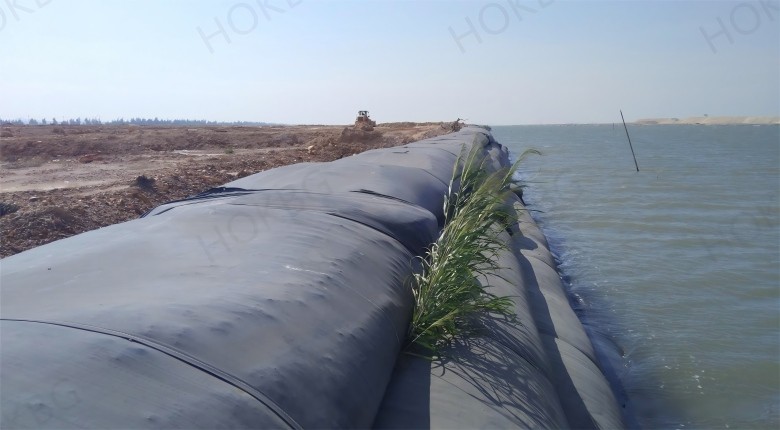
Innovations in this area often involve creating "soft" or nature-based solutions alongside hard engineering. For instance, a well-designed Construction Plan for Coastal Protection and Restoration Using Geotextile Tubes can be an effective and more environmentally friendly alternative to traditional rock walls, creating stable structures that can be vegetated to blend into the natural landscape.
Hydraulic and Sand Spreading Land Reclamation
Hydraulic filling is a common method where fill material is transported as a slurry through pipelines and discharged into the reclamation area. It is highly efficient for placing granular materials like sand. The ratio of water to sand is carefully controlled to ensure optimal transport and deposition. This method is used extensively for creating large, uniform areas of reclaimed land.
When the seabed is very shallow or the existing soil is too soft to support other methods, sand spreading is used. In this technique, a barge or a specialized spreader pontoon gently discharges sand through perforations in a discharge pipe, often while moving, to lay down controlled layers of new material. This method was notably used in large-scale projects in Singapore, such as the Changi East and Pulau Tekong reclamation projects.
Below is a table summarizing these reclamation methods:
| Method | Description | Best For |
|---|---|---|
| Infilling/Backfilling | Placing rock, soil, and other materials into an enclosed area to raise the land level. | Smaller-scale projects or where fill materia l can be sourced from land. |
| Dredging | Excavating sediment from a water body and depositing it elsewhere to create new land. | Large-scale projects like artificial islands and port expansions. |
| Deep Cement Mixing | Mixing cement in-situ with soft or contaminated soil to stabilize it without excavation. | Environmentally sensitive areas with contaminated materials. |
| Hydraulic Filling | Pumping a slurry of sand and water through pipelines to the reclamation site. | Large-scale placement of granular fill material. |
| Sand Spreading | Gently discharging sand in controlled layers, often used over soft seabed conditions or in shallow water. | Areas with soft seabed soil where other methods are unsuitable. |
| Poldering | Enclosing an area with dikes and then pumping the water out to create dry land below sea level. | Draining wetlands or shallow coastal areas, famously used in the Netherlands. |